
We wrote an article back in 2019 called "What Are The Running Costs of Your Valencia Property?" It was one of the most read articles on the blog and still gets a lot of traffic today. The problem is it's now seven years old, the world has changed and continues to change at an even faster pace. In fact the World is now in a totally different place. Lots of things can change in seven years.
Let's make a list shall we. Since 2019 we have had a global pandemic, a continuing war in Ukraine, an energy crisis across Europe as a result, inflation that made your eyes water due to supply chain issues during the pandemic and after, and now we have that idiot in the White House dragging the US and Israeli coalition into a war with Iran that has closed the Straits of Hormuz (unless you send the Theocracy 2 million in untraceable Bitcoin) and sent global energy markets into chaos yet again. Oil has gone above $100 a barrel for the first time since the Ukraine crisis and European gas prices have doubled since the start of the year. The UK, Germany, Italy and others are bracing for another round of energy price pain.
And here in Spain? It's a different story. Not a perfect story, but different on the good side. And that is why the article needs rewriting.
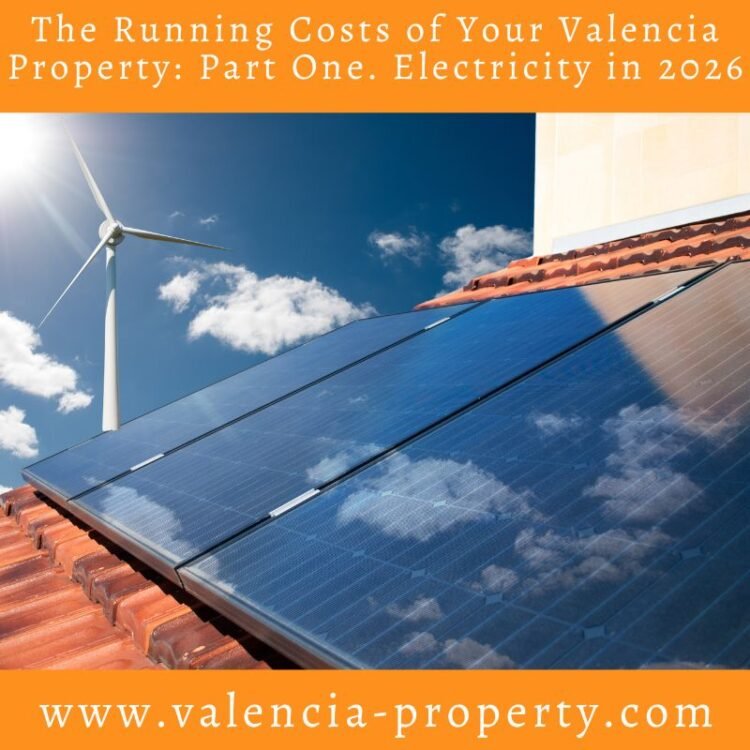
The original article covered everything from IBI to Internet. We are going to split it up this time. This week we are focussing entirely on electricity costs because what has happened in Spain over the last seven years on electricity is arguably one of the biggest positive changes in the country during my 27 years here and it's a long story on its own. It affects what you pay every month, it affects how you heat and cool your home, it affects whether you can charge an electric car (Which were scarce in 2019 and you can read our Electrify Your Life article for more on that) and it affects how exposed we are to the kind of global energy shocks that are hitting right now. Next week we will cover the rest of the running costs: gas, water, community fees, internet, insurance, security, pools and gardens and a few other daily costs.
Spain's Renewable Revolution
Some numbers are needed here because they help to illustrate the story really well.
In 2019 when we wrote the original article, renewable energy supplied a maximum of 37% of Spain's electricity. Good but not great. We told you at the time that electricity was comparatively expensive and renewable usage was low. Things have changed and for the better. In 2025 renewables supplied 55.5% of Spain's electricity and that number is growing fast. On certain days renewables can account for 100% with surpluses going into battery storage. Wind was the single biggest source of power in the country in 2025, ahead of nuclear and gas. Solar was right behind and is growing fast. Spain hit 50 GW of installed solar capacity at the start of 2026. The country did not use coal fired power at all in August 2025. Not a single kilowatt.
Self consumption solar installations, people putting panels on their roofs, hit 9.3 GW of capacity last year. Between 2020 and 2024 Spain cut its power sector import bill more than any other country in the EU, avoiding 26 billion cubic metres of gas imports and saving an estimated 13.5 billion Euros. In February 2026 renewables hit 63% of Spain's generation mix and the average wholesale electricity price that month was 16 Euros per megawatt hour. On some days it was close to zero.
That is a complete transformation in just seven years. Imagine what may happen in the next seven years with the push being given from the latest Oil and Gas price shock.
And here is the thing that is even more important, your personal decisions can make a difference too. You as a consumer can now choose to be part of this change. Suppliers like Naturgy and Octopus Energy offer tariffs that supply 100% renewable electricity all the time, not 55% not 63% but 100%. You are not just helping the planet, you are helping your wallet too because these suppliers tend to be cheaper than the legacy providers like Iberdrola and Endesa. We switched our own properties to Naturgy and Octopus over the last year and the savings were immediate. More on that later.
The Iran War and Spain's Renewable Shield
This week the Financial Times ran an article called "Spain is a role model in weathering Iranian oil shocks." Their point was simple. Most of Europe is getting hammered by high gas and oil prices because of what is happening in the Gulf. Gas prices have doubled. But the price of electricity in Spain has stayed remarkably stable compared to almost everywhere else. The FT reported that Spain's electricity prices only reached or exceeded the average cost of gas fired electricity about 15% of the time so far in 2026. In Italy gas set the electricity price 89% of the time. In the UK, despite generating over half its power from renewables and nuclear, gas still set the electricity price about two-thirds of the time.
Spain's forecast average electricity price for the rest of 2026 is about 66 Euros per megawatt hour. That is roughly half what Italy is facing. Gas only dictates the electricity price here for about 15% of the day. So when gas prices spike because of events in Iran or anywhere else the effect on your electricity bill in Spain is far more muted than it is in Germany, Italy or the UK. The Spanish Embassy in London was out on social media last week pointing out that electricity prices here were seven times lower than in France and Germany on one particular day. The government is cherry picking a bit there, it is not always seven times lower, but the direction of travel is clear and consistent.
Now it is not all perfect. Spain had that nationwide blackout in April 2025 and plenty of people were very quick to blame renewables. Too quick in fact. The final report came out this week from ENTSO-E, the body that oversees Europe's interconnected grid. Renewables did not cause it. It was a grid management and coordination problem. The report is clear on that. Spain's grid operator has reinforced the system since and that has added some cost to bills in the short term. But the fundamental picture remains the same. Spain's bet on renewables is paying off and it is paying off precisely at the moment when the rest of Europe is most exposed. If you are coming from the UK where gas sets the electricity price two thirds of the time or from Italy where it is almost 90% of the time, you will feel this difference in your pocket every single month.
What Will You Actually Pay?
Without any mitigation a typical apartment electricity bill in Valencia could well be between 60 and 90 Euros per month depending on usage and the time of year. Air conditioning in summer and heating in winter push the numbers up. For a house you are looking at 80 to 150 Euros per month in normal conditions and depending on the size of the house. These numbers are higher than in 2019 but they have not risen as much as you might expect given everything that has happened since then. And there are obvious things you can do to bring them down which maybe weren't available in 2019 or were considerably more expensive.
Firstly, make sure your contracted power (potencia) is right. Every bill has a fixed charge for the power you have contracted regardless of whether you use any electricity at all. The standard used to be 3.3 kW but these days 5.75 kW is more realistic if you want to use a washing machine, an oven and a kettle without tripping the supply. Too low and everything trips. Too high and you are paying for potential you never use. Get this right and you can save a chunk of change every month.
Secondly, shop around. The electricity market in Spain is competitive and there are some good deals out there if you compare suppliers. We have switched our own properties between Endesa, Naturgy and Octopus Energy over the last year and saved hundreds of Euros annually just by checking tariffs and moving. Suppliers like Octopus offer simple flat rate tariffs with no time of use complications. If you have solar panels then others like Naturgy offer solar tariffs with virtual battery storage where your summer surplus gets credited and used against winter bills. The days of just staying with whoever the previous owner was contracted with when buying their property are over. Check your tariff, compare the market and switch. It takes little time and the savings are real. We can do it for you if you like but more about that later.
Solar Panels. The No Brainer.
We wrote about this in our Electrify Your Life article back in 2024 and everything we said then has become even more true. If you have a house or a penthouse apartment with roof access then solar panels are a no brainer. We said it then and we are saying it even louder now.
Spain has finally caught up with itself on this. The old "sun tax" (Impuesto del Sol) that penalised people for generating their own electricity was scrapped back in 2018 and since then installations have gone through the roof, in fact they've gone onto the roof, literally. The country now has over 9 GW of self consumption solar capacity installed. A typical house installation of 10 to 12 panels with around 3 to 4 kW of capacity will cost in the region of 4,000 to 7,000 Euros depending on the setup. We have 12 panels producing 300 watts each on our own property giving us a 3.6 kW system. In the summer that was producing over 20 kWh per day. Even allowing for shorter days and cloud cover it provides the vast majority of our electricity needs across the year despite our large home usage.
Many towns offer a 50% reduction in your IBI (council tax) for five years when you install solar panels. In my town that saved us 1,500 Euros over the five years on top of the reduced electricity bills. There are also regional grants available, some funded through the EU's New Generation programmes. We got 40% of the installation paid for through this system. It allows discounts on both panels and batteries. The payback period on a good sized system is typically 3 to 7 years depending on grants, discounts and size and after that you are generating free electricity for the next 20 plus years and offsetting costs. Your house also goes up in value. You can offset the costs of installation against capital gains tax if or when you eventually sell because it counts as a mejora, a capital improvement.
Battery Storage. The Game Changer.
For those who want to go further, and really you should, there is battery storage. A home battery system stores the solar energy you generate during the day for use at night or during cloudy periods. We have a 15 kWh battery on our property with a Huawei inverter and it has made a massive difference.
Traditionally, without a battery you generate solar during the day when you are probably at work or out and about. The excess gets exported back to the grid for a few cents per kilowatt hour. Then in the evening when you actually want to use electricity you buy it back from the grid at three or four times the price. That was a bad deal. Batteries changed the game. With a battery you store that daytime surplus and use it yourself in the evening and through the night. Our system charges from solar during the day and then we run the house off the battery from dusk. If it runs down we can also fill it at night with cheaper electricity as follows.
To do this we went a step further and switched the inverter to TOU (time of use) mode on the phone app which comes with solar installations. This means on days when solar generation is low, the battery charges itself from the grid overnight when electricity is cheapest, at about 8 cents per kilowatt hour on our Naturgy tariff, and then we use that stored cheap electricity during the expensive peak hours. If the battery fills to 100% then we sell it back to the grid at 6 cents per kwh. The savings are immediate.
Battery systems add 3,000 to 8,000 Euros to the cost of a solar installation depending on capacity. A 5 kWh battery is fine for an apartment or small house. A 10 to 15 kWh system makes more sense for a larger property and if you have an electric car you want to charge (Though charging directly from the grid at night if possible is the most efficient and cheapest way to do this).
The technology has also improved enormously in the last few years. Lithium ion phosphate batteries are now standard, they last longer, they are safer and prices are still coming down meaning that you can start with a 5 or 10kwh system then up that as required when prices make sense.
Virtual Batteries. The Free Alternative.
Another game changer for when you cannot install a physical battery, perhaps because you are in an apartment or you do not want the upfront cost, there is another option. Some suppliers now offer virtual battery schemes where your exported solar surplus is stored as a credit rather than being compensated at a low rate.
Naturgy's virtual battery scheme and Octopus's Solar Wallet both do this. Your summer surplus, when you are possibly generating more than you use, builds up as credit that offsets your winter bills when solar generation is lower. It is not quite as good as having a physical battery but it is free to set up and for apartments where you cannot install battery storage it is a smart option. We looked at this when switching our own supply and the numbers stack up, even with a physical battery as when the actual battery is full you are still earning, especially if you go away in the summer and your panels are exporting all day with nobody home using the electricity.
The Bottom Line
Electricity in Spain has gone from being one of the most expensive running costs to one of the most manageable. Seven years ago, when we wrote the original article, Spain had some of the highest electricity prices in Europe. Now it has some of the lowest. The combination of low wholesale prices driven by the renewables revolution, competitive retail tariffs, solar self consumption and battery storage in a 320 days per year sunny country, means that your electricity bill on a Valencia property can be brought under control in a way that was not possible in 2019.
And right now, this week, with the world going sideways and backwards again because of events in the Middle East and a dunce in the White House, Spain's position looks even better relative to everywhere else. That renewable shield is not just an abstract economic concept now. It is the difference between your electricity bill going up by 5% or 50% or perhaps even reducing it by a huge margin. If you are coming from the UK or other countries where gas sets the electricity price two thirds of the time or from Italy where it is a ridiculous 90% of the time, you will notice this price change every single month.
We Can Help You Save Money On Your Bills
If all of this has got you thinking about your own electricity bill, or if you have just moved to Valencia and you are stuck with whatever supplier the previous owner had, we can help. We now offer a bill optimisation service where we look at your electricity bills, compare the market for you, find the best tariff for your situation and handle the switch. We do the same for gas, internet and insurance too. Most of our clients save several hundred Euros a year and some save a lot more than that. It is one of those things that everyone knows they should do but nobody gets round to doing, especially when the bills are in Spanish and the tariff structures make your head spin. So we do it for you. You can read about how the service works and what it costs in our Valencia Property Services 2026-27 article. Or just get in touch with us and we will take it from there.

Property of the Week
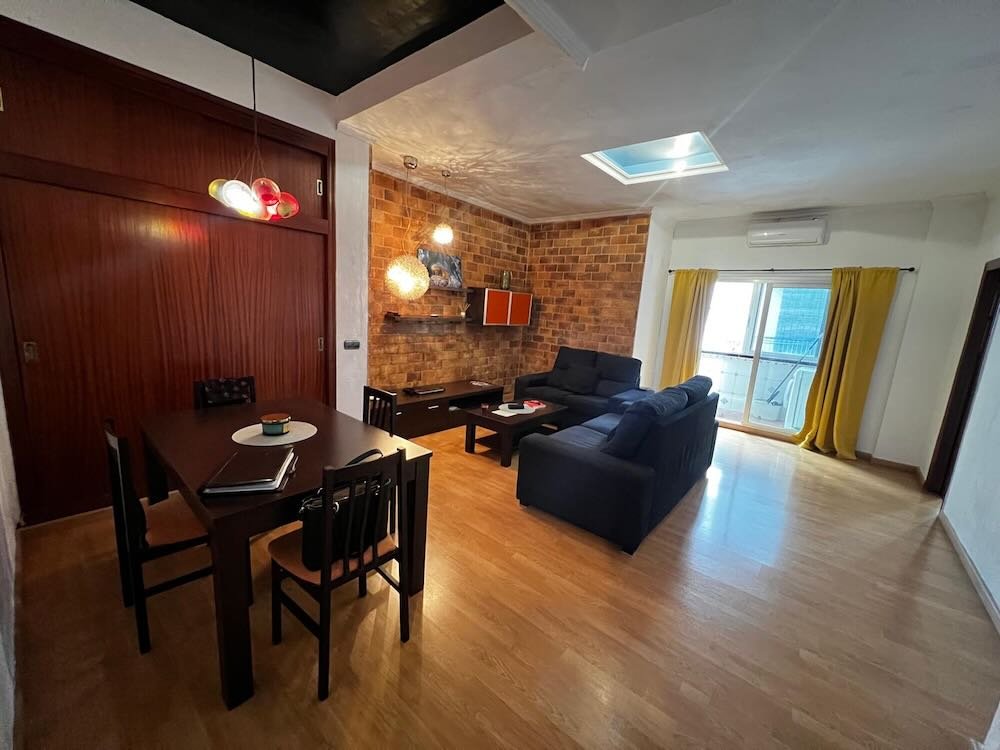
The bolthole to end all boltholes. If it just has to be Ruzafa for you because you have heard so much about it and love the vibe then this apartment with plenty of character in the heart of Ruzafa, in a 1923 building that keeps its original charm might be one that suits you. Equally finding an apartment in Ruzafa for under 300k these days is rare. There is no wasted corridor space as the 67m² are well used.
Two bedrooms face the street, both with balcony access. The main one is a double with a fitted wardrobe and the other is a single. The living-dining room is generous because it absorbed what was originally a third bedroom and the entrance hall. The ceilings were lowered at some point, but the original vaulted ceilings at over 3 metres could be restored if you fancy the project.
The kitchen with a window to the lightwell is easy to open up to the living room and in our opinion should be. There's a bathroom with shower and although not huge the space is well thought out. There is also a storage room included on the ground floor.
East-west orientation: natural light all day, cooler in the summer, warmer in the winter.
There is no lift currently, but the neighbours have installed one on either side in similar buildings so it's doable if you can get the community onside and actually feel you need one.
If you want something with personality and don't mind a first floor without a lift (for now), in the true beating heart of Ruzafa but on a pedestrianised street then it's worth a look.
Stepping Stones Rental of the Week

Paradise on Poeta
A true hidden gem tucked away just behind the historic Calle de la Paz. Perfectly positioned between the Túria Gardens, Colón high street, and the Old Town, this location really feels like a secret hideout, peaceful and private, yet right in the heart of everything. Finding a home here is like discovering a very fancy needle in a haystack.
This duplex apartment offers two spacious terraces, two bedrooms, and a generous living area complete with a fireplace. One of its most distinctive features is the mid-level kitchen and outdoor dining space, which feels straight out of a French country home and gives the property its unique, warm, and inviting character.
Ideal for a couple or a small family, and the best part? It's pet friendly!
If You Liked This...
Then make sure to click through the images below for more of our content. Guides, socials and podcasts. You're covered for everything.





Asturias in the sun
— Graham Hunt (@grahunt.bsky.social) March 19, 2026 at 2:09 PM
[image or embed]

 WhatsApp us


